
Cancer- Hydrogen Gas: From Inflammation Treatment to Cancer Therapy
ACS Nano 2019 | Fuzhou University & NIH
From Inflammation Treatment to Cancer Therapy
Conclusion
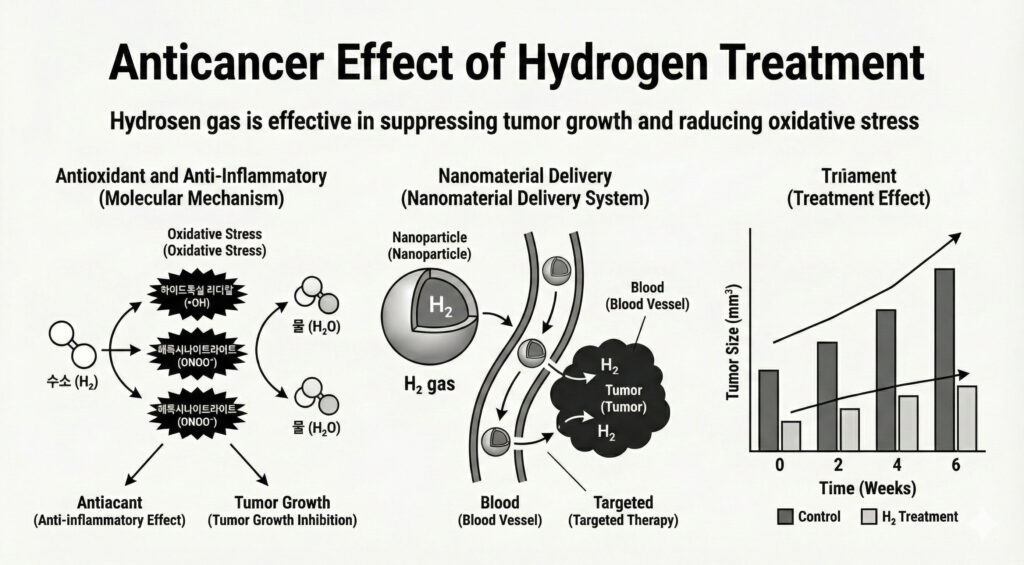
- The study investigated the anti-inflammatory, antioxidant, and anticancer effects of hydrogen gas (H₂) using both animal models and human clinical trials.
- Hydrogen therapy was administered via inhalation, oral intake, and injection, and efforts were made to maximize therapeutic efficacy through nanomaterial-based targeted delivery systems.
- The results demonstrated that hydrogen therapy was effective in inhibiting tumor growth, reducing oxidative stress, and modulating inflammatory responses, with enhanced outcomes observed when nanomaterial-based targeted delivery systems were employed (p < 0.05).
Wu et al., ACS Nano (2019) Perspective on H₂ nanomedicine

Photobiomodulation Treatment Device
Hyperbaric Oxygen Chamber
Hydrogen Inhalation Machine
Nano-bubble Hydrogen
Water Generator
Whole Body Wave
Motion Exercise Device
Nitro Biome
BAHI Longevity
Product Background
References
Customer Center
Get In Touch
- Haan-ro, Gwangmyeong-si, Gyeonggi-do, Republic of Korea
- +82)2-898-2116
- info@huelight.kr
Copyright 2026 © Hue Light Co., Ltd. All rights reserved.
Disclaimer: The medical papers and academic information provided on this site are intended for educational purposes only and are not meant to
diagnose, treat, prevent diseases, or substitute for a doctor’s advice.